Ex-New York Times Journalist Explains the Psychology of Billionaire AI CEOs
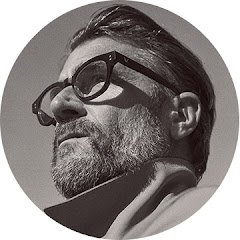
Nick Bilton, an ex-New York Times journalist who has covered Silicon Valley extensively, explains how tech billionaires use sophisticated storytelling and "reality distortion fields" to build their personal brands and accumulate power, often prioritizing their own legacy over truth or safety. Bilton argues that these titans—from Steve Jobs to Elon Musk to Sam Altman—have mastered myth-making to such a degree that they've begun believing their own narratives, with dangerous implications for AI development and society. For builders and entrepreneurs, understanding these psychological tactics is essential for recognizing when you're being sold a story versus presented with facts.
Key takeaways
- • Tech billionaires invest heavily in communications teams to craft and control their public narrative; even their most spontaneous-seeming moves (like Elon's Boring Company) are often calculated brand theater designed to move stock prices and capital flows rather than solve real problems.
- • The "reality distortion field" pioneered by Steve Jobs—the ability to make people believe things that contradict evidence—has become a template copied by subsequent founders; once these executives become billionaires, they internalize their own mythology and stop accepting contradictory information, creating self-reinforcing echo chambers.
- • Successful founders often suffer from impostor syndrome paired with extreme confidence, which creates a dangerous psychology where they believe they're unqualified for their current role but simultaneously believe their success in one domain qualifies them as an expert in all domains (politics, medicine, society-building).
- • AI company leaders are using existential risk narratives as a fundraising mechanism—framing AI as an existential threat to humanity justifies massive capital raises and allows them to position themselves as the only ones capable of safely steering the technology, despite evidence suggesting safety is not their primary focus.
- • Use AI tools like Claude and Cursor as a creative collaborator, not a replacement for human thinking—building bespoke AI agents with distinct personalities and expertise (virologist, conspiracy theorist, studio head) can function as a scalable writer's room for developing screenplays, books, and creative projects faster than traditional methods.
- • AI-generated imagery and content creation tools democratize production in ways comparable to the MP3 moment for music—soon anyone with a computer will be able to create Hollywood-quality visual media from a bedroom, which will have both liberating and destabilizing effects on creative industries and information ecosystems.
Recommendations (6)

"I create these AI images that I walk people through as I'm pitching the story. Um, I find it really like a great way to tell to tell a story. And I use Midjourney for it"
Nick Bilton · ▶ 1:43:02
Mentioned (5)
More from these creators
Rebuilding My Body & Starting Over After Spinal Fusion Surgery
How to End the Addiction Cycle & Transform Your Life
Recovering Alcoholic Breaks Down Tiger Wood's Behavior
Happiness Expert on How Lockdowns, Social Media & Division Broke Our Brains
Nutritionist Exposes the Flaws in the New Health Pyramid
Neuroscientist Warns: These Daily Habits Are Raising Your Dementia Risk