How Global Security, AI, and Geopolitics Are Reshaping The Investment Landscape
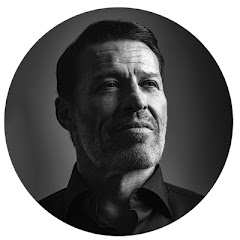
Tony Robbins interviews former Secretary of Homeland Security Michael Chertoff and Chad Sweet about how geopolitical instability, AI, and emerging security threats are reshaping investment opportunities and risk management strategies. The episode makes a case that defense and security spending—projected at $2.7 trillion globally in 2025—represents a larger, more stable investment thesis than AI infrastructure, with critical implications for founders, investors, and business leaders navigating an increasingly multipolar world.
Key takeaways
- • Apply the risk formula (Risk = Threat × Vulnerability × Consequence) to focus security spending on high-consequence threats rather than wasting resources on low-impact scenarios; most organizations over-allocate to low-consequence threats and under-protect critical assets.
- • Defense and security spending ($2.7 trillion) dwarfs hyperscaler AI capex ($600 billion) and offers more predictable returns because governments and enterprises *must* buy for survival, making it a non-discretionary, recession-resistant sector with 4x the addressable market.
- • Move from a perimeter security mindset to resilience and antifragility—assume you will be penetrated or disrupted, then build organizational practices that allow you to recover faster than competitors, turning security into a competitive advantage.
- • Evaluate entrepreneurs and investment targets on integrity and behavior, not just claims; watch whether they invest heavily in their own cybersecurity and dual-use capabilities, as cutting corners on internal security signals they're taking outsiders shortcuts that create outsized investor risk.
- • The commercial sector is no longer a safety zone in geopolitical conflict—Iran has explicitly targeted AWS data centers supporting military operations and listed major tech companies (Google, Cisco, HP) as targets, forcing every enterprise to build resilience independent of government protection.
- • Dual-use technology advantage: prioritize companies that serve both government and commercial markets, as this diversification insulates them from government shutdowns, provides lower-beta cash flows, multi-year contract visibility, and sticky customer relationships unavailable in pure commercial businesses.
Recommendations (1)

"There's a great book some of your listeners may have read called Antifragile by the famous risk options trader Nassim Taleb and he basically talks about this idea that you can actually create comme..."
Chad Sweet · ▶ 1:04:16
Mentioned (4)

More from these creators
How to Take Control of Your Mind And Overcome Depression
The Evolution of Tony Robbins From the 90s to Today
These 3 Patterns Will Give You POWER In Uncertain Times
Tony Robbins Saves A Relationship in Under 1 Hour | Full Intervention
George Janko Asks Tony Robbins About His Spiritual Beliefs
Tony Robbins Helps Alex Hormozi Deal With Feeling Numb