AI + Synthetic Biology: The Most Transformative Technology in Human History | Ben Lamm (Colossal)
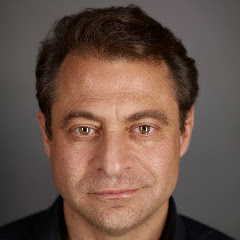
Ben Lamm, CEO of Colossal, discusses how AI + synthetic biology create a platform for designing and building living products—from de-extincting species like woolly mammoths to creating plastic-degrading microbes and gene drives for invasive species control. Lamm argues this combination of technologies represents the most transformative opportunity in human history, with markets potentially reaching the multi-trillion-dollar scale, and reveals how Colossal has scaled from zero to $10 billion valuation in four years by building an end-to-end biological engineering pipeline rather than solving isolated healthcare problems.
Key takeaways
- • Colossal uses AI to enable genome-scale edits at unprecedented scale and accuracy: the company has progressed from doing dozens of edits at 40% efficiency (considered elite 2-3 years ago) to hundreds of edits at 90% efficiency today, with thousands of edits coming soon—capabilities no other company has matched.
- • De-extinction isn't just a moonshot stunt—it's a $1.7 trillion market opportunity driven by educational content, species preservation, and ancillary licensing; EY estimated global consumers spend roughly $1.7 trillion annually on extinct-category products (tourism, media, merchandise) that could be layered with authentic biodiversity impact.
- • Spinning out dedicated teams for breakthrough discoveries (rather than spreading thin) allows Colossal to focus its platform on biodiversity while launching sister companies like Frankie (plastic degradation via engineered microbes) that leverage the core synthetic biology engine and share editing efficiencies across portfolio.
- • Gene drives for invasive species control represent a $5+ trillion annual economic problem in the U.S. alone, yet current solutions rely on poisoning, trapping, and culling—making humane biocontrol via engineered organisms a massive untapped market with proprietary rollback safety mechanisms.
- • IVF embryo selection relies on archaic morphological grading, but Colossal's hydrogel and microfluidics technology keeps embryos healthier longer and provides more accurate selection criteria than current industry practice, with potential to transform human reproductive medicine if spun out or licensed.
- • Building a global bio-banking infrastructure (partnering with governments like the UAE to fund "Biovaults" for endangered species) creates sovereign incentives for biodiversity preservation while generating net-new educational and economic value, moving beyond fragmented nonprofit efforts.
Recommendations (3)
Mentioned (2)
More from these creators
Uber’s Robotaxi Playbook, End of Human Driving & $10B Bet on Robots | Dara Khosrowshahi (Uber CEO)
NVIDIA's $1 Trillion Prediction, Anthropic Beats OpenAI, Tesla vs. TSMC & The CS Job Collapse | 240
Peter Zeihan: The War With Iran Could Reshape the Global Economy | Prof G Conversations
Elon Musk: Optimus 3 Is Coming, Recursive Self-Improvement Is Already Here, and the Singularity #239
Meta Buys Moltbook, GPT 5.4, and Fruitfly Brain Upload | Moonshots Live at The Abundance Summit 238
OpenClaw Explained: Baby AGI, Security Threats, Mac Mini Became Everyone's Supercomputer | #237